
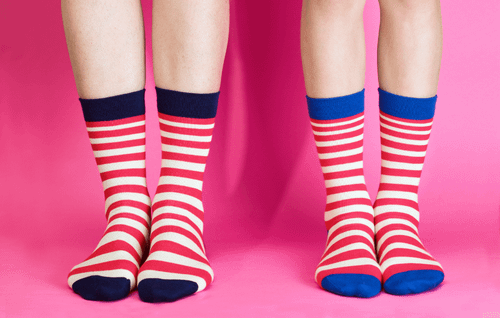
Sensory Symmetry: Why Some People Need Things to Feel “Even”
Have you ever seen your child:
- Touch one hand… then immediately touch the other?
- Bump one shoulder and insist on bumping the other?
- Step on a crack with one foot and then deliberately step on one with the other?
- Get deeply distressed if something feels “uneven” on their body?
That need for balance - for things to feel “the same on both sides” - isn’t quirky. It’s not attention-seeking. And it’s definitely not made up.
It’s something often referred to as sensory symmetry, and it’s more common than people realise, especially in autistic and ADHD individuals.
What Is Sensory Symmetry?
Sensory symmetry (sometimes described in research as symmetry compulsions or evening-up behaviours) is the strong internal need for physical sensations to feel balanced across the body.
If one side experiences pressure, touch, movement, or sensation - the other side may need to match it.
It’s not about logic.
It’s about how the nervous system processes sensory input.
For some people, asymmetry feels uncomfortable. For others, it feels almost intolerable.
The Brain Science Behind It
Research in sensory processing and autism suggests that many neurodivergent individuals experience:
- Heightened tactile sensitivity
- Differences in proprioceptive processing (body awareness)
- Increased interoceptive awareness (internal body sensations)
- Strong pattern detection tendencies
Our brains are wired to notice patterns and predict outcomes. Symmetry is one of the most fundamental patterns humans are drawn to. In fact, neurological studies show that symmetrical stimuli are processed more fluently and often perceived as more pleasing or “correct.”
For some neurodivergent brains, that pull toward symmetry can be amplified.
The body notices imbalance and the nervous system wants to resolve it.
Is It OCD?
Sometimes symmetry needs overlap with OCD, particularly when:
- The urge is intrusive and distressing
- The person feels something bad will happen if they don’t “even it up”
- The behaviour becomes time-consuming or compulsive
In OCD research, symmetry and “just right” compulsions are well documented. Individuals may repeat actions until sensations feel correct.
But not all sensory symmetry is OCD.
In many neurodivergent people, it’s purely sensory regulation - not fear-driven compulsion.
The key difference is the motivation:
OCD = anxiety relief
Sensory symmetry = nervous system balance
Sometimes, of course, they coexist which is why professional support is important if distress is significant.
What It Can Look Like in Everyday Life
In real-world parenting terms?
- Your child brushes one arm against a doorway and immediately brushes the other.
- They insist both socks feel identical or they cannot focus.
- They want both hands equally dirty or equally clean.
- They ask you to squeeze both shoulders, not just one.
- They can’t sleep unless their blankets feel evenly distributed.
It can be subtle. Or it can be very big.
Why It Happens More in Neurodivergent People
Autistic and ADHD brains often process sensory input differently. Research shows:
- Increased sensory sensitivity in autism
- Stronger bottom-up processing (detail-first perception)
- Heightened body awareness
- Greater discomfort with unpredictability
- Symmetry creates predictability.
- Predictability creates safety.
For a nervous system that already feels overloaded, symmetry can be grounding.
It’s a way of saying: “This feels organised. This feels correct. This feels regulated.”
How to Support a Person Who Needs Symmetry
First and most importantly: don’t shame it.
Comments like:
“Stop being silly.”
“That doesn’t matter.”
“You don’t need to do that.”
…can create anxiety around something that is actually soothing.
Instead:
- Validate the Experience
“I can see that it feels better when both sides match.”
- Offer Proprioceptive Input
Deep pressure (like shoulder squeezes or weighted blankets) can help regulate the whole body, reducing the intensity of asymmetry discomfort.
- Create Predictable Routines
The more regulated the nervous system overall, the less intense the need may become.
- Seek Support if It’s Distressing
If symmetry needs are causing major delays, anxiety, or interfering with daily life, consult a psychologist or OT, particularly if OCD is suspected.
A Strength-Based Reframe
Here’s something interesting:
The same drive toward symmetry and “just right” feelings often links to:
- Strong aesthetic awareness
- Engineering skill
- Design thinking
- Attention to detail
- Mathematical reasoning
The brain that notices imbalance quickly also notices patterns quickly.
And that’s powerful.
From a Mum Who’s Seen It
I’ve watched my kids “even up” their world in ways that made no sense to outsiders - but perfect sense to them.
Sometimes it’s fleeting.
Sometimes it’s intense.
Sometimes it’s deeply regulating.
What I’ve learned is this:
When we understand the nervous system behind the behaviour, the frustration melts away.
It’s not defiance.
It’s not drama.
It’s a body asking for balance.
And once we see it that way, we can respond with compassion instead of correction.
Sensory symmetry isn’t something to fear - it’s something to understand.
The more we learn about how neurodivergent brains process the world, the more we realise:
They’re not broken.
They’re finely tuned.
Sometimes they just need both sides to feel the same before they can move forward.
And honestly? That makes a lot of sense as Sensory Symmetry is important to me too as a neurodivergent adult.
With curiosity and calm,
Jody
Recent Posts
-

Sensory Symmetry: Why Some People Need Things to Feel “Even”
Have you ever seen your child: Touch one hand… then immediately touch the other? Bump one shoulder …Mar 03, 2026 -

What If Neurodivergent Brains Are the Future?
For years, the conversation around autism, ADHD, and other neurodivergent profiles has focused on de …Feb 23, 2026 -

When Back to School Doesn’t Happen
Every January, my feeds fill with first-day photos. Crisp uniforms. Fresh haircuts. Nervous smiles a …Feb 09, 2026