
Child Psychology
There are many reasons why a child might be referred to for Child Psychology including, but not limited to:
• Developmental delay in speech and language
• Learning and attention problems like Attention Deficit Hyperactivity Disorder (ADHD)
• Developmental disorders such as Autism Spectrum Disorder (ASD)
• Mental health problems such as anxiety or depression
• Interpersonal / relationship issues with their peers, family etc
• Behavioural problems like anger, misbehaving, aggression, self-harm
• Management of issues related to chronic illnesses
• Adjustment issues eg. helping to deal with major life events
During the initial consultations your psychologist will endeavour to gain a good understanding of your child’s presenting difficulties and the current concerns regarding their mental health. This involves collating information from various sources such as parent interview, consultation with the child’s teachers, observation of the child at school/kinder/child-care and at home and a one-on-one session with your child which may include clinical diagnostic tests. This information combined helps them to form a diagnosis of your child’s condition and plan appropriate treatment.
There are many types of therapies that involve different interventions, approaches and techniques. Your psychologist may utilise one or a combination of a few that they deem most appropriate for your child after they have been assessed. Some of the main therapies involved in Child Psychology include:
Cognitive Behaviour Therapy (CBT)
CBT helps people to change unhelpful or unhealthy negative thinking habits, behaviours and feelings. It is very helpful for children who have anxiety, depression or who have problems coping with stress.
Family Therapy
Family Therapy focuses on helping the whole family function in more constructive and positive ways. The psychologist will provide education and support to facilitate good communication and behaviours to create and maintain a harmonious, happy household.
Group Therapy
Children meet in groups and are guided by one or more psychologists to discuss and solve problems as well as learn new skills such as anger management and social skills.
Play Therapy
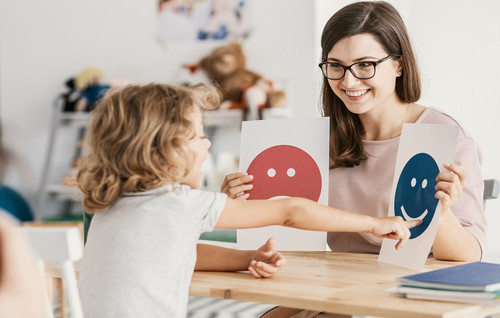
This is a non-directive therapy approach which is child led and leads to a development of safe feelings and a relationship of trust with the psychologist. Children are encouraged to express their thoughts and verbalise their feelings through toys, dolls, drawing, puppets, blocks and games.
Recent Posts
-

Waiting Mode - The Neurodivergent Art of Doing Absolutely Nothing Before an Appointment
You know that thing where you have an appointment at 3pm… …and suddenly the entire day is unusable? …Sep 03, 2026 -

Autistic Pride Day 2026
More Than Awareness, Less Than Perfection, Exactly As It Should Be Today is Autistic Pride Day. And …Jun 18, 2026 -

International Day of Play - Every Child Deserves the Chance to Play
When people think about play, they often picture children running around a playground, kicking a bal …Jun 11, 2026